781 826 8888 . com

781 826 8888 . com 781 826 8888 . com 781 826 8888 . com
Home
Foundation for Humanity
Gardens
Nature Preserve
Wildlife Report

781 826 8888 . com

781 826 8888 . com 781 826 8888 . com 781 826 8888 . com
Home
Foundation for Humanity
Gardens
Nature Preserve
Wildlife Report
More
  • Home
  • Foundation for Humanity
  • Gardens
  • Nature Preserve
  • Wildlife Report
  • Home
  • Foundation for Humanity
  • Gardens
  • Nature Preserve
  • Wildlife Report

Nature Preserve Wildlife Report


A professional evaluation of the habitats and the wildlife they support.


Prepared by JOHN P. RICHARDSON
NATURALIST / HISTORIAN
1985     

for:
Dr. R. Iacobucci, Executive Director
Nature Preserve Inc.
Pembroke, Massachusetts


Dear Dr. Iacobucci,

     At the outset let me thank you for the guided tour of the Nature Preserve.  On the way down from Hingham I wondered how your Preserve might compare to other preserves, forests, and parks I have studied.  I find it necessary to believe in what I write about so would not agree to accept a study or write a statement regarding any open space which I thought less than worthwhile. 

     I returned to the Preserve early on Memorial Day spending a grand two hours exploring every off trail nook and cranny.  What I observed and experienced during those
two hours inspires me to report to you that the Nature Preserve is all and more than the name suggests.  Those two hours were, to say the least, a unique experience. Robinson Creek and the expansive panorama of tidal marshes is the Preserve’s highpoint which pulls all the other variable attributes into a cohesive and rewarding outdoor experience.
The Nature Preserve is, without a doubt, a local and regional treasure containing an uncommon variety of plant communities and wildlife habitats compacted into a relatively small tract of seventy acres. 

I can confidently write that I have never observed so many species of bird life and other wildlife or signs of wildlife in such a short period of time (two hours)  on such
a relatively small tract of land in all my years of exploring New England open spaces.


    As I previously stated the Nature Preserve contains an uncommon variety of plant
communities within a relatively small area. Each distinctive plant community contains specific plants that are attracted to the site because of specific conditions such as, but not limited to, soils, wetness, dryness, exposure, etc.
This variety of plant communities ensures a wide variety of wildlife food plants and habitats.  This variety and balance attracts an uncommon variety of wildlife strengthening the thesis that this tract of land is finely tuned to be a truly credible Nature Preserve.  The variety of plant communities and their statements in conjunction with the astonishing variety of wildlife underscores the fact that this relatively small tract of land contains all the ingredients necessary for a full and valuable educational experience. 

I know of no other local open space where school children could walk over a relatively short distance and come into contact with such a variety of situations that could be skillfully utilized to promote environmental awareness. 

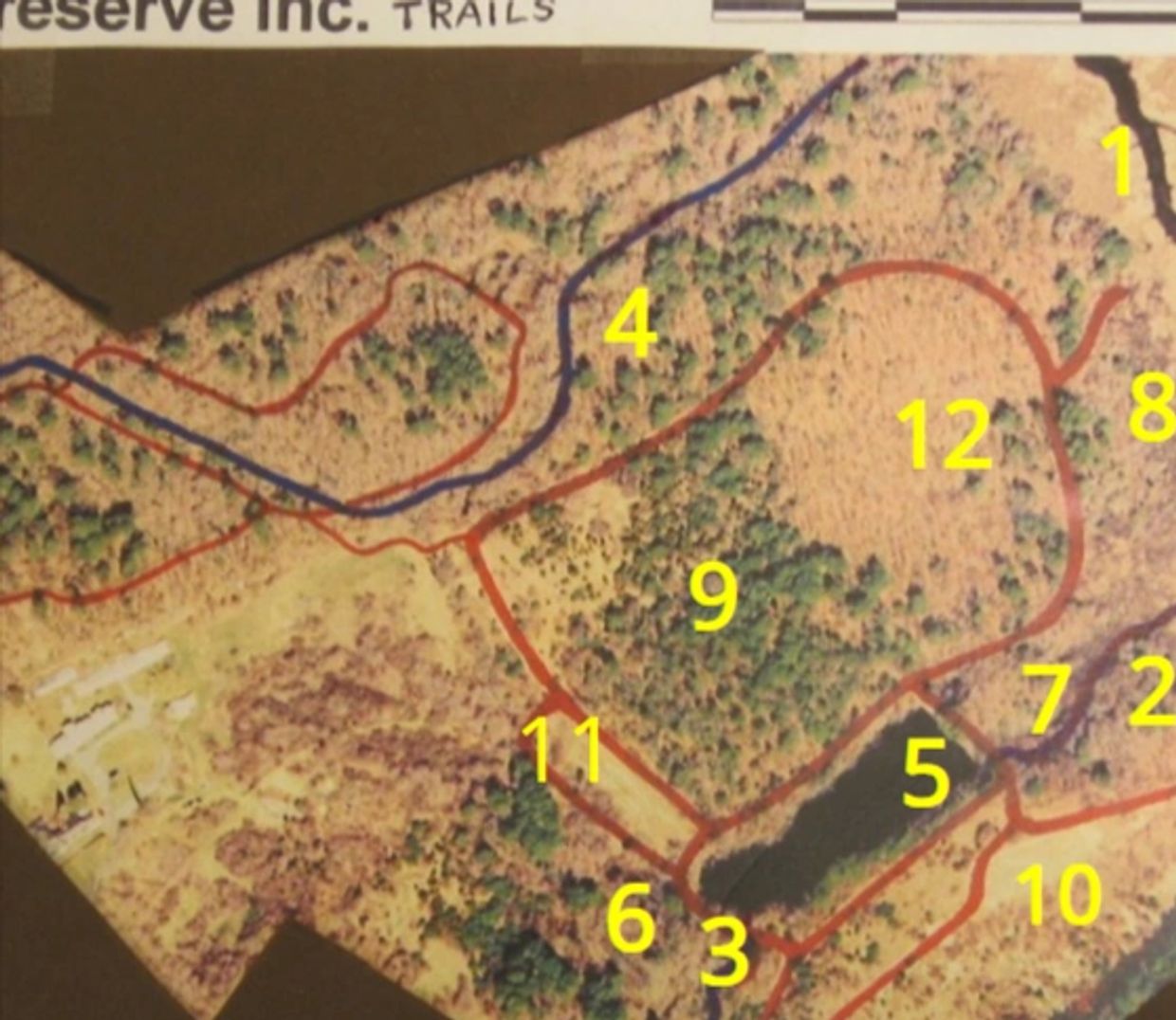
HABITATS IDENTIFIED


 Plant communities  which I have identified:

  1. Tidal Marsh Community
  2. Tidal Creek Community
  3. Fresh Water Marsh Community
  4. Stream Bank Community
  5. Pond Community
  6. Shrub Swamp Community
  7. Wooded Swamp Community
  8. Flood Plain Community
  9. Hilltop, Midslope, & Low Slope Communities
  10. Sand Plain Community
  11. Meadow and Succession Field Communities
  12.  Burned Woods Succession Community

The burned woods and sand plain communities present the educational potential for
observing the successive stages of natural revegetation after catastrophic disaster.  These two communities are “frosting on the cake” in relation to the Nature Preserve attributes.

The burned woods area contains many prostrated, decomposing hulks of White Pine
as well as several still standing.  Both those standing and those prostrated are wildlife communities unto themselves. The standing hulks of old fire killed pine attract several species of birdlife that feed on insects and grubs within the rotting wood as well as
providing nesting space for several woodpecking species.

     The “Sand Area” or sand plain is in actuality a sand/gravel borrow site that now is a
hostile desert-like environment as far as most native plant species are concerned, yet still there are several species that have established substantial colonies in the first succession period.  The contrast between the “barren wastes” of the Sand Area and the serene, picturesque scene of the adjacent pond is startling.  Several species of turtle move out of the pond and creek to lay eggs in the sandy soils of the Sand Plain.  Although the Sand Area is the result of mankind’s commercial enterprise, it most likely represents the
condition of much of New England after the glaciers scoured the surface some 10,000 years ago.  One hundred years from now the Sand  Area will be covered with a
heavy growth of trees and shrubs. Reforestation can be accelerated by the spreading of wood chips, tree prunings, and other cast off vegetation over the Sand  Area.
This would introduce some shade from the scorching sun, increasing the chance for germination and the survival of seedling trees and shrubs. 

The decomposing vegetation would also introduce a layer of organic material on top of the naked sand. 

Erosion on the slopes would also be retarded. The Burned Woods Community and the Sand Plain Community add interest and strength to the Nature Preserve Inc., for they provide dramatic educational opportunities within a few yards of each other.

     The small pond community is the result of man damming a brook that rises west of Route 53.  The result is similar to what happens when beaver dam a stream. 

It creates an environment that attracts many species of wildlife.  This particular pond community is especially suited to wildlife observation and educational pursuits because it is totally accessible by circumferential trails, which trails also abut other communities
overlooking the pond.

  At the pond’s southwest end there is a shrub swamp and wooded swamp community. 

To the west there is an open meadow  community, while to the northwest a pine woods covers a hillside. 

To the immediate north there is an old reforested borrow area, while to the northeast, below the dam, there is a streambank and wooded swamp community. To the southeast, of course, there is the Sand Area Community.  All these environments can be experienced without leaving the circumferential pond trail. Here, along a roughly circular 200 yard trail from the dam around the pond back to the point of beginning, there exists a truly dynamic, multi-faceted educational and recreational opportunity.  This panorama of plant communities coming Together, as they do, about the pond represent a variety of wildlife habitats and food sources which is the essence of a viable Nature Preserve.


An interesting local geological attribute is a glacial outwash plain roughly contained within an area bounded by Route 53, Briggs Cemetery, a portion of Robinson’s Creek, an old wood road to Pleasant Street and the westerly half of Pleasant Street.  The southwesterly portion of Water Street nearly bisects the glacial outwash plain in half.  A small portion of the plain is in the preserve.  The Sand Area (so called) is a part of the outwash plain.  Fortunately, the most dramatic portion of  the outwash plain, identified by steep slopes that rise abruptly sixty or seventy feet over Robinson Creek, have survived.  Views from the outwash plain terrace over Robinson Creek, the marshes, and beyond Route 139 to the North River floodplain are extensive and dramatic.  The sudden variances in topography from Robinson Creek to the outwash plain terrace only adds dimension and quality to the variable qualities of the Nature Preserve Inc.  Another attribute of the outwash plain is the white pine climax forest that covers the terrace and a part of the slopes.  When the colonists settled Massachusetts Bay and before the virgin stands of white pine forests were harvested it was typical to see vast stands of white pine, some of immense height and girth, growing on the sandy soils often found along the river valleys.  The stand of pine on the preserve’s outwash plain is, in small measure, representative of the pre-settlement period.  Some of these pine, if they survive the elements, will continue to grow to great size for centuries yet to come. 

At the base of the outwash plain along Robinson Creek bountiful springs of clear, pure water pour out of water bearing till of the outwash plain.  The spring brooks abound with wildlife.  I noted the tracks of fox, raccoon, and other small mammals as well as numerous birds and amphibians.  In my opinion the glacial outwash plain, the steep slopes, the numerous springs, distinctive views, and climax white pine forest are a cohesive unit of importance within the Nature Preserve.

     There are other notable environments within the Nature Preserve - a climax forest of
pine, oak and hickory way in the north most corner; a tiny, secluded wet meadow alive with warblers the day I came upon it; a field of wind blown grass with hawks soaring over head and an owl in the big oak near the fence row; a hillside pasture now succeeding slowly to forest but where there are still apples, pears, cherries, blueberries, blackberries, wild strawberries, and bittersweet; but the most notable feature in the entire preserve may be a tiny hillside sand hollow where the truly rare Prickly Pear Cactus has gained a foothold – the only specimen I have ever seen in Massachusetts.  Is this a state endangered species?

 { NOTE:  The cactus is no longer to be found in 2014 } 

      The  highpoint of the Nature Preserve is the mouth of Robinson Creek and the wide
expanse of tidal marsh.  Here the sea, although somewhat diluted, and Pembroke meet.
This rich tidal creek is a place where creatures orientated to the sea
intermix with those that dwell inland.  I think it fair to state that  Robinson Creek, the tidal marsh, and the adjacent uplands and wetlands of the Nature Preserve represent one of the richest wildlife sanctuaries surviving in Pembroke today.  

     Historically the Nature Preserve relates directly to the North River, one of the most scenic and historic rivers in New England.  Nearby, at the north terminus of Brick Kiln
Lane was the famous Brick Kiln Shipyard.
The Briggs family was famous in the history of North River and, in fact,
one member wrote a History of Shipbuilding on the North River.  The historic
Briggs cemetery abuts the Nature Preserve protecting a part of the preserve’s
south flank from commercialization. 

It is said that prehistoric people lived within the preserve, occupying a part of
the outwash plain terrace overlooking Robinson Creek.  I am told that stone implements and a hearth have been discovered here.  No doubt there are other historic associations within the preserve, but to me the most notable perception for this day is that the Nature Preserve protects, in a natural state, a notable tract of land that overlooks and is a part of the historic North River tidal plain.

CONCLUSIONS


1. The Nature Preserve Inc. has local and regional significance containing an uncommon variety of plant

communities and wildlife habitats compacted into a relatively small area.

2. The Nature Preserve Inc. contains all the ingredients

necessary for a full and  valuable educational and recreational experience.

3. Robinson Creek, the tidal marsh, and the adjacent uplands and wetlands of the Nature Preserve Inc. represent one of the richest and most variable wildlife sanctuaries surviving in Pembroke today.

4. The Nature Preserve Inc.

preserves in a natural state an outstanding tract of open space that overlooks and, in fact, is a cohesive part of the historic, scenic North River tidal open

space.


     I found the Nature Preserve to be a rich and variable experience.  I shall return many times in the future to enjoy and to learn from what it offers.


Respectfully,                                              

         John P. Richardson


INVENTORY OF WILDLIFE

BIRDS

 All specimens observed on Memorial Day morning 1985.  This was one of the most lucrative observation walks I ever experienced.  The Nature Preserve was literally alive with birds. 


 Hairy Woodpecker                           Black & White Warbler               Little Green Heron
Cedar Waxwing                               Yellowthroat                                  Egret
White-throated Sparrow                   Pigeon Hawk                              Herring Gull
Worm-eating Warbler                      Robin                                             Barn Swallow
Tree Sparrow                                   Wood Thrush                                  Blue-winged Teal
American Kestrel                             Mourning Dove                              Yellow-crowned Night
Cardinal                                            Crow                                                  Heron
Killdeer                                             Grackle                                               Eastern Kingbird
Common Merganser                          Great Horned Owl                        Great Blue Heron
Palm Warbler                                     Baltimore Oriole                            Field Sparrow    Hooded Warble  
Chipping Sparrow                              Mocking Bird                                Rufous-sided Towhee
Brown Thrasher                                 Golden Shafted Flicker                 Blue Jay 
Mallard                                               Common Pigeon                          Belted Kingfisher
Sandpiper ?                                         Scarlet Tanager                             Pine Grosbeak 
Indigo Bunting                                    Song Sparrow                              Ruby-crowned Kinglet   
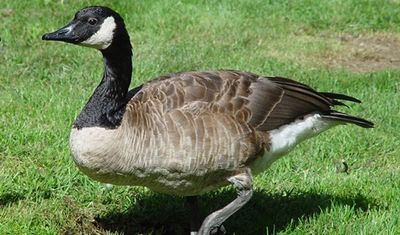
Lesser ? Yellowlegs                            Canada Geese (4 in creek            Eastern Phoebe
Pine Warbler                                       Cow Bird                                       Catbird      
Marsh Hawk                                        Red Tailed Hawk                       Chickadee 
Downy Woodpecker                            Swamp Sparrow ?                      Yellow Warbler
Tufted Titmouse                                   Partridge
Whip-poor-will                                     Red Winged Blackbird
Wren                                                     Bank Swallow ?
White-breasted Nuthatch                  Woodcock
  

TREES

  Observed at Nature Preserve Inc., Pembroke, Mass.  May, 1985 


 American Chestnut                         Red Oak
White Oak                                      Red Cedar
Scarlet Oak                                    Apple
Bear Oak                                        Pear
Pin Cherry                                    Smooth Bark Hickory
Black Cherry                                Red Pin
Red or Swamp Maple                 Black Hawthorn
Quaking Aspen                             White Ash
Grey Birch                                     Honey Locust
American Elm                              White Pine
Walnut                                            Sugar Maple
Sugar Maple                                  Black Gum or Tupelo
Flowering Dogwood   (3 specimens)        Sassafras
Linden                                              Sycamore Maple (an escape at Sand Area)
Pitch Pine                                     White Birch
Swamp White Oak                       American Hornbeam
Yellow Birch                                  Slippery Elm
White-cedar                                   Bigtooth Aspen ?
Black Birch                                         Shag Bark Hickory
 

Colorado Blue Spruce – A three or four foot specimen located on Robinson Creek floodplain near Preserve’s northeast corner.  This is the first time I have ever observed a Colorado Blue Spruce as an escape in such a remote location.  (Later I discovered another specimen at the northwest corner of the unnamed pond just north of the path intersection.)

*  Less than five specimens noted on the Preserve
**  Only one specimen noted on the Preserve
Observations by John P. Richardson
MAMMALS

REPTILES

 observed or signs of these creatures observed at the Nature Preserve Inc., Pembroke, Mass., May 1985

Red Fox – Much sign, at least two active dens with bird bones (fresh) scattered about, hair caught on brush near burrows, tracks, droppings, well defined trails.  Red Fox observed, 4:15 P.M., June 11, 1985.
Flying Squirrel ?
Raccoon  (tracks observed at Robinson Creek)
Opossum  (tracks observed at the Sand Area)
Chipmunk  (observed)
Grey Squirrel  (observed)
Red Squirrel  (observed)
Woodchuck  (observed)
Cottontail  (observed)
Skunk  (tracks observed at Robinson Creek)
Mink  (observed at Howard Pond dam site)
Muskrat  (three observed at Robinson Creek) 

REPTILES

REPTILES

 Painted Turtle  (observed)
Spotted Turtle  (observed)
Snapping Turtle  (remains of shell observed at Howard Pond)
Bull Frog  (observed)
Leopard Frog  (observed)
Green Frog  (observed)
Toad  (tiny young toads observed; also tadpoles)
Spotted Salamander  (observed)
Red-backed Salamander  (observed) 

AMPHIBIANS

AMPHIBIANS

Fish Observed

Common Sunfish
Pickerel
Catfish
Brook Dace
Herring  (in tidal portion of Robinson Creek)

Snakes Observed

Water Snake  (noted three specimens)
Garter Snake
Milk Snake

SHRUBS

 Observed  May 27, 1985 


Winterberry                                                          Maple-leafed  

Viburnum Arrowwood                                         Red  Chokeberry 

Buttonbush                                                           Sweet Pepperbush
Elderberry                                                              Withered Viburnum
 Gooseberry                                                             Staghorn Sumac
**  Mountain Laurel  (1 plant)                           Smooth Sumac
Sheep Laurel                                                         Huckleberry
Shadbush                                                               *Russian Olive  (escape)
Flowering Crabapple  (escape)                         European Barberry  (escape)
Common Barberry                                              Bayberry
Honeysuckle Bush  (escape)                             Alder
Highbush Blueberry                                          Lowbush Blueberry
Blackberry                                                            Sweetbriar
Swamp White Azalea                                      **Poison Sumac
 * Wingbark  (Euonymous)  (escape)             Pussy Willow
 Lilac  (escape)                                                     Japanese Bamboo
 Alternate-leaf Dogwood                                   Red-osier Dogwood
 Witch Hazel                                                        Spicebush 

WILD FLOWERS VINES

WILD FLOWERS VINES

WILD FLOWERS VINES

 observed on May 27, 1985

Stinging Nettle                                 Chicory
    Field Mouse-ear Chickweed            Plantain
    Pink Lady Slipper                             Ragweed
    Wintergreen                                      Pigweed
    Starflower                                         Timothy
    Ground Cedar                                    Smooth Crabgrass
    Pokeberry                                          Goldthread
    Pachysandra  (escape)                       Bladder Campion
    Partridge Berry                                  Moneywort
    Bunchberry  (C. canadensis)             Sneezeweed
    Spreading Dogbane                           Rattlesnake Weed
**Birdfoot Violet                                  Seaside Goldenrod
    Blue Flag                                           Sweet Goldenrod
    Ginseng                                              Curly Dock
    Wild Sarsaparilla                               Common Speedwell
              Solomon’s-seal                                  Blue Toadflax                           
    False Solomon’s-seal                         White Lettuce
    Swamp Dewberry                               Swamp Loosestrife
    Wild  Strawberry                                Pale Corydalis
    Goldthread                                          Dog Violet
    Marsh Marigold                                  Lady’s Thumb
    Sweet Fern                                          Herb Robert
    Royal Fern                                       * Wood Lilly
    Jack-in-the-pulpit                                Wild Oats
    Skunk Cabbage                              * *Trout Lily
    Wild Geranium                                    Celandine
                  Twin Flower                                        Dodder                             
    Moth Mullein                                      Yarrow
    Common Buttercup                             Boneset
    Blue Vervain                                        Milkweed
    Arrowhead                                           Pickerel Weed
    Early Meadow Rue                              Spotted Joe-Pye Weed
One Flowered Cancer Root                   Pinesap
Ground Joy                           Swamp Candles
    Hedge Bindweed              Cynthia or Dwarf  Dandelion                        
    Swamp Buttercup             Golden Ragwort or Squaw-weed
    Multi-flora Rose                Rattlesnake Plantain  (11 plants)
    Virgins Bower                * Pipsissewa or Princes Pine
    Tall Meadow Rue              White Violet  (V. blanda)
    Pearly Everlastings            Duckweed  (pond plant)
    Shinleaf                              Red and White Clovers

 Canada Mayflower                           Thistle      

Indian Pipe                          Nightshade     

Yellow Pond-lily or  Spatter Dock              White Daisy        

 Prickly Pear  (Opuntia  ? )           Water Lilly   

 Purple Trillium                       Spotted Wintergreen          

    Meadow Sweet                 Cat-brier             

    Wood Anemone                   Blue Vetch            

    Monkey-flower                    Self-heal or Heal-all 

VINES

WILD FLOWERS VINES

WILD FLOWERS VINES


Wild Geranium or Wild Cranesbill  (scarce on the Preserve)
   Hawkweed
   Star of Bethlehem  (escape)
   Tansy
   Wild Carrot
*  Cardinal Flower
    Toadflax or Butter and Eggs
    Hardhack or Steeple Bush
    Cattail
    Woodbine or Virginia Creeper
    Swamp Evergreen  (Lycopodium lucidulum)
    Ground-Pine  (Lycopodium dendroideum {obscurum})
    Common Wood Fern
    Royal Fern
    Common Brake or Eagle Fern  (Woodwardia angustifolia)
    Bittersweet
**Wisteria  (escape)
    Grapevines  (noted two species, at  least)
    Four leaf Loosestrife
 * Indian Cucumber Root
    Sphagnum
    Day Lilly  (escape)
    Common Cinquefoil
    Wild Columbine  (one patch – eight or ten plants noted)
    Sheep Sorrel
    Pusley

*    Less than five specimens noted at the Preserve
**  Only one specimen observed.  

END OF REPORT

END OF REPORT

END OF REPORT

END OF REPORT

END OF REPORT

END OF REPORT

  • 220
  • 300
  • 401 Cottage
  • 2015 Snow
  • Unit 165
  • Unit 185
  • Unit 250

781 826 8888 . com

172 Washington St., Pembroke, MA 02359

Call us at +1. 781-826-8888

Copyright © 2026  781 826 8888 . com - All Rights Reserved.

Powered by

This website uses cookies.

We use cookies to analyze website traffic and optimize your website experience. By accepting our use of cookies, your data will be aggregated with all other user data.

Accept